International Women’s Day: On Privilege, Possibility and Passing It Forward
If you don’t already know, the theme for 2026 International Women’s Day is Give to Gain. It is such a universal statement. You can give so much or so little and still make such a huge difference. And it made me personally pause. Not because I have a dramatic story of barriers overcome or glass ceilings shattered but almost because I don’t.
I grew up in the country, in a family that was steady, loving and encouraging. I was never told that education wasn’t for me. I wasn’t made to feel small for having ambition. I wasn’t raised to believe that certain rooms were off-limits. Even in the reality of life of the deep South in the 1990s my options felt open even though I didn’t fully understand that at the time.
That is privilege.
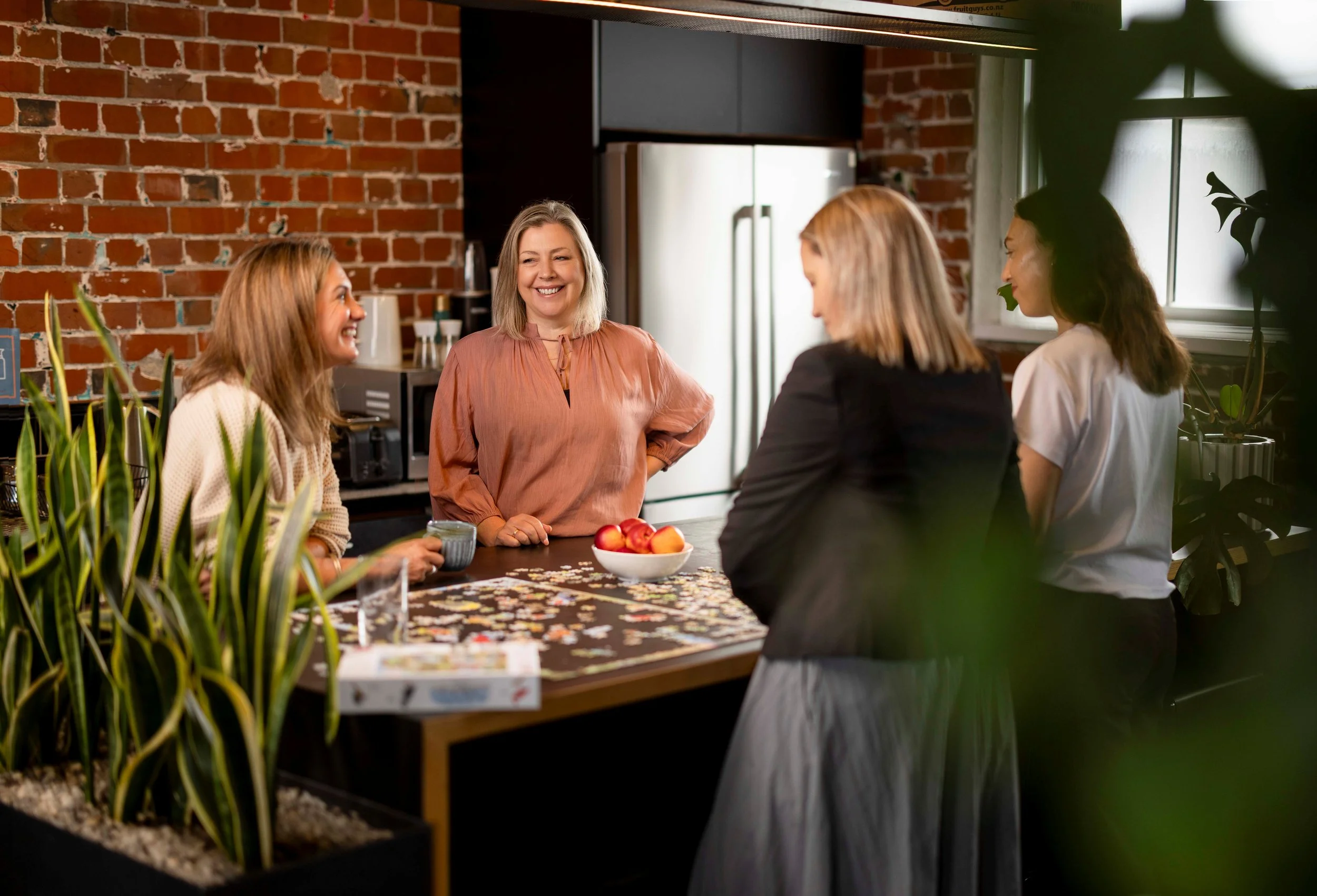
As I worked my way through administration roles, I didn’t feel like I was building anything remarkable. I was learning, contributing, having fun and traveling, figuring out what I was good at. Later, when life and finances weren’t quite stacking up but the family responsibilities certainly were, I made the practical decision to become a virtual assistant. It wasn’t a bold entrepreneurial leap. It was simply what made sense, what I needed to do for my family.
Nine years on, that practical decision has become a full business. Task It now supports multiple organisations, employs staff, and works alongside leaders doing meaningful work. Through my role with Graduate Women Canterbury, I also sit close to conversations about equity, education and access. I see the difference funding can make. I see how belief, sometimes from complete strangers, can change the direction of someone’s life.
And I’ve come to realise something important. Hard work matters. Determination matters. Resilience matters. But where you start from matters too.
Not every woman grows up feeling safe. Not every girl grows up believing she belongs in the room. Not every family has the means to quietly back their daughter’s education. When those foundations are missing, the climb is steeper. Acknowledging that doesn’t diminish my journey. It simply makes me more aware of the responsibility that comes with it. Privilege, to me, isn’t something to feel guilty about. It’s something to use to guide.
International Women’s Day shouldn’t just be a celebration of strong women. It should also be an invitation to men, to leaders, to parents, to colleagues to ask how we are actively creating environments where women can flourish. Because empowerment is not a women-only conversation.
It happens when men advocate for pay equity in rooms where women aren’t present.
It happens when leaders sponsor potential, not just experience.
It happens when fathers model respect and belief to their sons.
It happens when we encourage young women to apply before they feel ready.
It also happens in quieter ways, in workplaces that allow flexibility, in businesses that back mothers returning to work, in governance spaces that genuinely make room for diverse voices rather than simply ticking a box. Because lets just consider what it really is like being in spaces where diversity is encouraged. It’s genuinely incredible: voices, experiences, thoughts and history melded together within rich and moving conversations and actions which resonate with the collective.
For me personally, empowerment has looked like backing myself when the path wasn’t obvious. Charging appropriately for the value delivered. Hiring women and trusting their capability. Showing my children that building something from scratch is possible, even if it begins as a practical solution rather than a grand vision.
The older I get, the more I think confidence is less about boldness and more about permission. Permission to start, to take up space, to change direction and to lead, and to make the odd mistake without being too hard on yourself. And often, that permission is given or withheld by the culture around us. So, this International Women’s Day, I’m thinking less about celebrating achievement and more about expanding possibility.
What if we were intentional about lifting as we climb?
What if we measured success not only by what we build, but by who we bring with us?
What if men saw empowering women not as a gesture of support, but a strategic, moral and human role?
Because when women are educated, supported and confident, communities strengthen. We all know this, the proverb is older than time (even if I have butchered it a little). The ripple effect is as real as life itself. I may have started from a place of relative ease, but that makes the call even clearer: use what you have to widen the path for someone else.
Encourage the application.
Recommend the woman for the role.
Fund the scholarship.
Mentor generously.
Model respect.
Small acts compound. And if we want the next generation to grow up believing they belong anywhere they choose to stand, then it is all of our responsibility women and men to help build that belief.